Food Dehydrator 2026: The Ultimate Guide to Drying Fruits & Veggies
Do you remember the sweet scent of sun-ripened strawberries in your grandmother’s garden? There was something truly magical about capturing that peak summer flavor before the season ended. Sadly, many of us watch our fresh groceries wilt in the crisper drawer far too often.
It feels like a real waste of hard-earned money and nature’s best gifts. Transforming those fresh harvests into chewy snacks or savory treats changes your entire kitchen routine. By removing moisture, you lock in the vitamins without using nasty additives or excessive sugar.
Investing in the best food dehydrator is a total game-changer for any modern, healthy home. Whether you want to make beef jerky or dry garden herbs, this equipment makes high-quality living simple. Let’s explore how these tools help you save money and eat better today.
Key Takeaways
- Preserve vital nutrients and natural flavors at home.
- Reduce grocery waste by extending produce shelf life significantly.
- Create healthy, chemical-free snacks for the whole family.
- Save money by buying bulk seasonal items and drying them.
- Unlock versatile cooking options from savory jerky to dried garden herbs.
- Simplify meal prep with lightweight, portable ingredients.
Why You Need a Food Dehydrator in Your Kitchen
A food dehydrator is more than just a kitchen gadget; it’s a gateway to healthier eating and reduced food waste. By allowing you to preserve fruits, vegetables, and even meats, a food dehydrator opens up a world of culinary possibilities while helping you make the most of your grocery shopping.
Dehydrating food is a simple process that removes the water content, thereby preventing the growth of bacteria, yeast, and mold. This method of preservation not only extends the shelf life of food but also retains most of its nutritional value.
Health Benefits of Dehydrated Foods
Dehydrated foods are a healthy alternative to many processed snacks available in the market. By dehydrating foods at home, you can avoid adding preservatives and sugars often found in commercial dried products. Dehydrated fruits and vegetables retain most of their vitamins and minerals, making them a nutritious choice for snacking.
- Rich in fiber and antioxidants
- Lower in calories compared to fried snacks
- Free from added preservatives and sugars
Cost Savings and Food Preservation
One of the significant advantages of owning a food dehydrator is the potential for cost savings. By preserving seasonal produce, you can enjoy your favorite fruits and vegetables throughout the year without having to purchase them at potentially higher out-of-season prices. Moreover, dehydrating food helps in reducing food waste by allowing you to use up produce that might otherwise spoil.
For instance, buying in bulk during sales or preserving a bumper crop from your garden can be a cost-effective way to enjoy healthy food year-round. Preserving food through dehydration also supports sustainable living by reducing the need for packaging and long-distance transportation associated with store-bought dried goods.
Reducing Food Waste at Home
Food waste is a significant issue in many households. A food dehydrator can play a crucial role in reducing this waste by enabling you to preserve food that is nearing spoilage. This not only saves you money but also contributes to a more sustainable lifestyle.
“Reducing food waste is one of the most effective ways to live more sustainably. By preserving food through dehydration, households can make a significant impact.”
By incorporating a food dehydrator into your kitchen routine, you can take a proactive step towards minimizing waste and maximizing the value of your grocery purchases.
Types of Food Dehydrators Explained
Food dehydrators come in several types, each designed with unique features and benefits. Understanding these differences is key to selecting the right dehydrator for your needs.
Stackable Tray Dehydrators
Stackable tray dehydrators are popular for their versatility and ease of use. They consist of multiple trays that can be stacked on top of each other, allowing for the dehydration of various foods simultaneously.
How They Work
These dehydrators work by circulating hot air around the food using a fan. The heat is usually generated at the base of the unit, and the trays are designed to allow air to pass through, ensuring even drying.
Key Features: Adjustable temperature control, multiple trays for simultaneous drying, compact storage.
Best Uses
Stackable tray dehydrators are ideal for home use, especially for those with limited storage space. They are perfect for drying fruits, vegetables, and herbs.
Box and Shelf Dehydrators
Box and shelf dehydrators offer a different approach to food dehydration. They typically have a more robust construction and are designed for larger or more commercial use.
How They Work
These dehydrators use a similar principle of circulating hot air, but they often have a more powerful heating element and fan. This allows for faster and more efficient drying.
Efficient drying is achieved through the precise control of temperature and airflow.
Best Uses
Box and shelf dehydrators are suited for heavy-duty use, making them ideal for commercial purposes or for individuals who plan to dehydrate large quantities of food regularly.
Commercial vs. Home Use Models
When choosing a food dehydrator, it’s essential to consider whether it’s designed for commercial or home use. Commercial models are built to withstand heavy usage and often come with additional features such as higher temperature ranges and larger capacity.
Here’s a comparison of the key features of stackable tray and box/shelf dehydrators:
| Feature | Stackable Tray Dehydrators | Box and Shelf Dehydrators |
|---|---|---|
| Capacity | Variable, depending on the number of trays | Larger, designed for bulk dehydration |
| Temperature Control | Adjustable, typically between 135°F to 155°F | Often more precise and higher temperature range |
| Best For | Home use, small to medium quantities | Commercial use, large quantities |
Best Food Dehydrator 2026: Top Picks and Reviews
In 2026, the best food dehydrators are not just about drying food; they’re about preserving nutrients and flavors. With numerous models available, selecting the right one can be challenging. This section reviews the top food dehydrators of 2026, helping you make an informed decision.
Nesco FD-1040 Gardenmaster
Overview
The Nesco FD-1040 Gardenmaster is a popular choice among home users due to its versatility and efficiency. It features a powerful 600-watt motor and a patented Converga-Flow drying system.
Key Features
- 600-watt motor for efficient drying
- Converga-Flow drying system for even drying
- 4 trays for simultaneous dehydration
- Adjustable thermostat for temperature control
Pros and Cons
Pros: Easy to use, efficient, and versatile.
Cons: Some users find the trays could be more durable.
Excalibur 3926TB
Overview
The Excalibur 3926TB is a high-end dehydrator known for its large capacity and advanced features. It’s ideal for heavy users and commercial applications.
Key Features
- 9-tray capacity for large-scale dehydration
- Digital controls for precise temperature and time settings
- Timer for automatic shut-off
- Even heat distribution for consistent results
Pros and Cons
Pros: Large capacity, precise controls, and durable construction.
Cons: Higher price point compared to other models.
Cosori Premium Food Dehydrator
Overview
The Cosori Premium Food Dehydrator is a modern, user-friendly model that offers advanced features at an affordable price. It’s suitable for both beginners and experienced users.
Key Features
- 6-tray design for flexible dehydration
- Digital touchscreen for easy operation
- 48-hour timer and automatic shut-off
- Safety features like overheat protection
Pros and Cons
Pros: User-friendly interface, affordable, and feature-rich.
Cons: Some users report issues with tray alignment.
Magic Mill Professional Dehydrator
Overview
The Magic Mill Professional Dehydrator is designed for heavy-duty use, offering a robust construction and advanced features.
Key Features
- 6-tray stainless steel design for durability
- Digital temperature control for precise settings
- 99-hour timer for extended dehydration sessions
- Even heat distribution for consistent results
Pros and Cons
Pros: Durable, precise temperature control, and long timer settings.
Cons: Some users find the assembly process complicated.
To help you compare these models directly, here’s a summary table:
| Model | Tray Capacity | Temperature Control | Timer | Price Range |
|---|---|---|---|---|
| Nesco FD-1040 Gardenmaster | 4 trays | Adjustable thermostat | No timer | $100-$150 |
| Excalibur 3926TB | 9 trays | Digital controls | Yes | $250-$300 |
| Cosori Premium Food Dehydrator | 6 trays | Digital touchscreen | 48-hour timer | $150-$200 |
| Magic Mill Professional Dehydrator | 6 trays | Digital temperature control | 99-hour timer | $200-$250 |
Essential Features to Look for When Buying
When it comes to buying a food dehydrator, there are several key features to consider to ensure you find the right one for your needs. A food dehydrator can be a valuable addition to your kitchen, allowing you to preserve fruits, vegetables, and meats while maintaining their nutritional value.
Temperature Control and Range
One of the most critical features of a food dehydrator is its temperature control and range. A good dehydrator should allow you to adjust the temperature between 135°F and 155°F, which is ideal for drying a variety of foods. Look for a model with precise temperature control to ensure that your dehydrated foods turn out perfectly.
Some dehydrators come with a fixed temperature setting, while others offer a range. If you plan to dehydrate different types of food, a model with adjustable temperature is preferable.
Tray Capacity and Size
The tray capacity and size of a food dehydrator determine how much food you can dry at once. Consider your needs: if you’re planning to dehydrate large quantities, look for a model with multiple trays and a large capacity.
A dehydrator with adjustable trays can be useful, allowing you to customize the space according to the type and quantity of food you’re dehydrating.
Airflow System and Heat Distribution
An efficient airflow system and even heat distribution are crucial for consistent results. A dehydrator with a robust airflow system ensures that all trays dry evenly, preventing some areas from becoming too dry or too moist.
Some models feature a horizontal airflow design, while others have a vertical airflow. Both can be effective, but the design may impact the dehydrator’s overall performance and ease of use.
Timer and Auto Shut-Off
A timer and auto shut-off feature can be very convenient, allowing you to set the dehydration time and let the dehydrator turn off automatically when the process is complete. This feature adds a layer of convenience and safety to the dehydration process.
Price Range and Budget Considerations
Food dehydrators vary significantly in price, ranging from under $50 to over $200. When comparing food dehydrators, consider your budget and the features that are most important to you.
To help you make an informed decision, here’s a comparison table of key features to consider:
| Feature | Basic Model | Mid-Range Model | High-End Model |
|---|---|---|---|
| Temperature Range | Fixed | Adjustable (135°F – 155°F) | Adjustable (100°F – 165°F) |
| Tray Capacity | 4 trays | 6 trays | 9 trays |
| Airflow System | Basic | Horizontal Airflow | Vertical Airflow with Fan |
| Timer and Auto Shut-Off | No | Yes, up to 24 hours | Yes, up to 48 hours |
| Price Range | $50-$100 | $100-$150 | $200-$300 |
When you’re ready to buy a food dehydrator online, consider these features and your budget to find an affordable food dehydrator that meets your needs.
How to Use Your Food Dehydrator: Step-by-Step Guide
The key to successful food dehydration lies in the details of how you prepare and operate your dehydrator. With the right steps, you can achieve perfectly dried fruits, vegetables, and more.
Preparing Your Dehydrator
Before you start dehydrating, ensure your dehydrator is clean and in good working condition. Refer to your user manual for specific instructions on assembly and initial cleaning.
Initial Preparation: Wash all trays and components with warm, soapy water, and dry them thoroughly.
Preparing Foods for Dehydration
Proper food preparation is crucial for effective dehydration. This involves washing, slicing, and sometimes pre-treating your food.
Washing and Cleaning
Rinse your fruits and vegetables under running water to remove dirt and pesticide residues. Use a vegetable brush for firmer produce like apples and carrots.
Slicing Techniques
Slice your food into uniform pieces to ensure even drying. The thickness of the slices can vary depending on the desired outcome; for example, thinner slices dry faster and are crisper.
Tip: Use a mandoline slicer for consistent thickness.
Pre-Treatment Methods
Some foods benefit from pre-treatment to enhance color retention and texture. Blanching or soaking in lemon juice can be effective methods.
“Pre-treating foods can significantly improve the quality of the dried product,” says a renowned food preservation expert.
Loading Trays Properly
Arrange food slices in a single layer on each tray, ensuring they do not overlap. This allows for proper air circulation around each piece.
Setting Temperature and Time
Different foods require different temperatures and drying times. Refer to your dehydrator’s manual or a reliable dehydration guide for specific settings.
- Fruits: 135°F – 145°F, 6-12 hours
- Vegetables: 125°F – 135°F, 6-12 hours
Testing for Doneness
Check your food periodically towards the end of the dehydration time. The desired level of dryness varies; some foods should be leathery, while others should be brittle.
Tips for Checking Doneness: Fruits should not be sticky, and vegetables should be crisp. Adjust drying time as needed.
Complete Guide to Drying Fruits
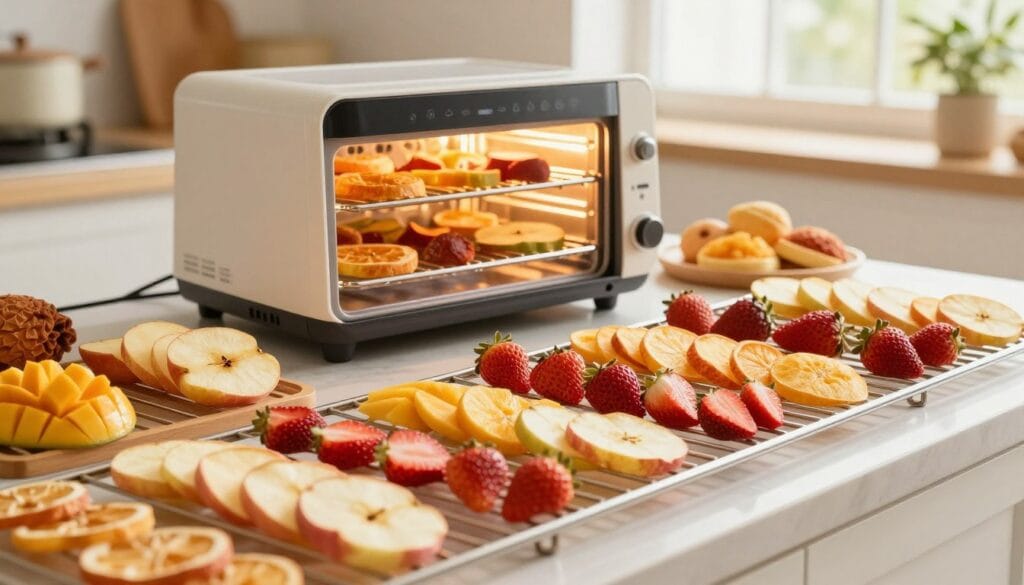
The process of drying fruits not only preserves them but also concentrates their flavors and nutrients. Drying fruits is a great way to enjoy seasonal fruits throughout the year while maintaining their nutritional value.
Best Fruits for Dehydrating
Not all fruits are created equal when it comes to dehydration. Some fruits retain their flavor and texture better than others. Apples, bananas, and mangoes are popular choices for dehydration due to their natural sweetness and texture.
- Apples
- Bananas
- Mangoes
- Berries (strawberries, blueberries, raspberries)
- Citrus fruits (oranges, lemons)
Preparing Different Fruits
Different fruits require different preparation methods before dehydration. Proper preparation ensures that the dried fruits are of high quality and safe to eat.
Apples and Pears
Apples and pears should be sliced thinly to ensure even drying. It’s also recommended to soak the slices in a mixture of water and lemon juice to prevent browning.
Berries and Grapes
Berries and grapes can be dried whole, but they should be washed and patted dry before dehydration. Berries can be quite delicate, so they require careful handling.
Bananas and Tropical Fruits
Bananas are best sliced into rounds or strips. Tropical fruits like mangoes and pineapples can be sliced or chopped into smaller pieces.
Stone Fruits
Stone fruits such as peaches and plums should be sliced and may require pitting. They can be quite juicy, so they may need a longer dehydration time.
Recommended Temperatures and Times
The temperature and time required for dehydration vary depending on the fruit. Generally, fruits are dried between 135°F to 155°F.
| Fruit | Temperature (°F) | Time (hours) |
|---|---|---|
| Apples | 135 | 6-8 |
| Bananas | 135 | 6-12 |
| Mangoes | 135 | 8-12 |
Storage Tips for Dried Fruits
Proper storage is crucial to maintaining the quality of dried fruits. They should be stored in airtight containers in a cool, dry place.
“Dried fruits can be stored for up to a year if kept in the right conditions. It’s essential to check on them periodically for any signs of moisture or spoilage.”
By following these guidelines, you can enjoy your dried fruits for a long time while maintaining their flavor and nutritional value.
Complete Guide to Drying Vegetables
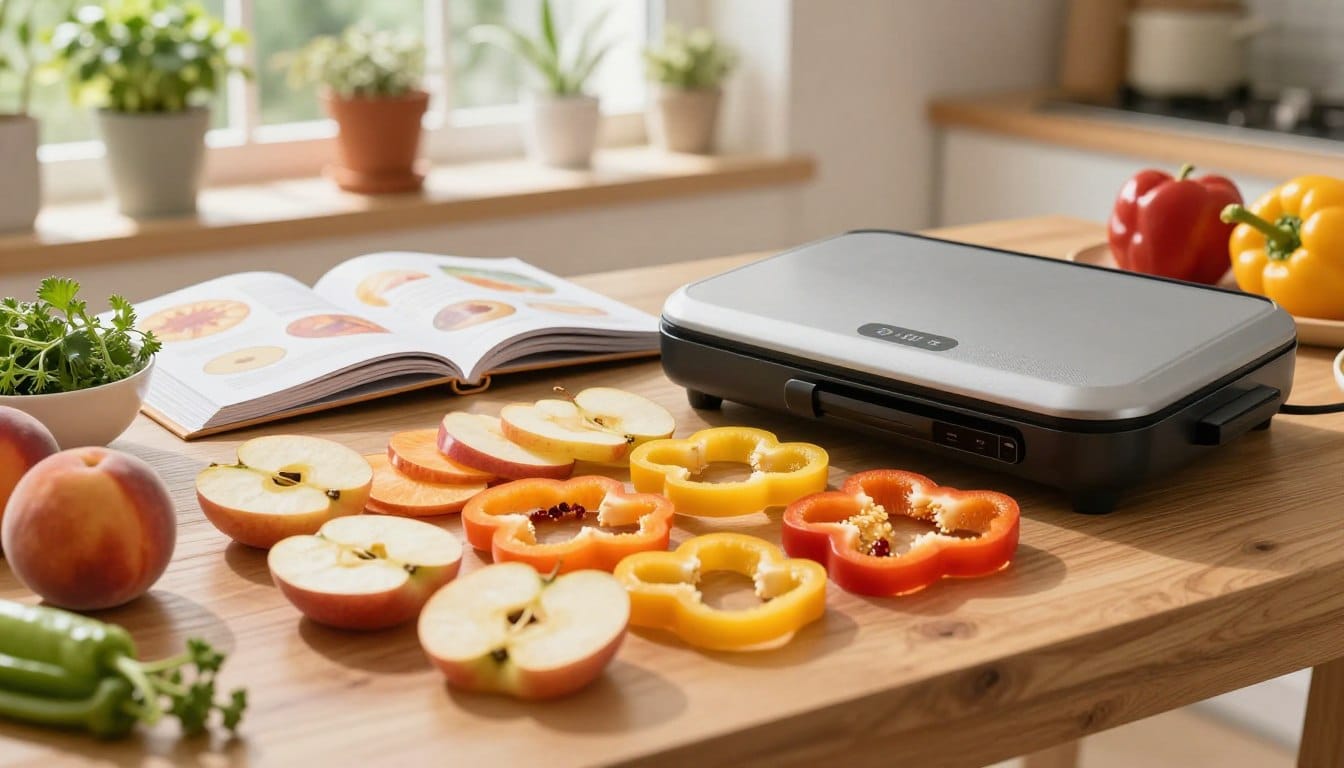
Dehydrating vegetables is an excellent method for maintaining their nutritional content and extending their shelf life. Using a food dehydrator for home use makes it easy to preserve a variety of vegetables for future meals and snacks.
Best Vegetables for Dehydrating
Not all vegetables are created equal when it comes to dehydration. Some of the best options include:
- Tomatoes
- Peppers
- Carrots
- Leafy greens like kale and spinach
- Mushrooms
- Onions
- Root vegetables such as beets and sweet potatoes
Preparing Different Vegetables
Different vegetables require different preparation methods before dehydration. Here are some specific guidelines:
Tomatoes and Peppers
Tomatoes and peppers can be dried whole, sliced, or chopped. For tomatoes, it’s often best to blanch them first to remove the skin. Peppers can be dried whole or sliced into strips.
Leafy Greens and Herbs
Leafy greens like spinach and kale can be dried by spreading them out in a single layer on the dehydrator trays. Herbs such as basil and parsley can also be dried using this method.
Root Vegetables
Root vegetables like carrots and beets should be sliced or chopped before dehydration. They can be dried at a lower temperature to preserve their color and nutrients.
Mushrooms and Onions
Mushrooms can be sliced and dried until they reach a crispy texture. Onions can be sliced or chopped and dried until they are brittle.
Blanching Before Dehydrating
Blanching is a crucial step for many vegetables before dehydration. It helps preserve the color, texture, and nutrients by inactivating enzymes that can cause spoilage. Vegetables like broccoli, cauliflower, and carrots benefit from blanching.
Recommended Temperatures and Times
The temperature and time required for dehydrating vegetables vary depending on the type and desired level of dryness. Here are some general guidelines:
| Vegetable | Temperature (°F) | Time (Hours) |
|---|---|---|
| Tomatoes | 135-145 | 6-12 |
| Peppers | 135-145 | 6-10 |
| Carrots | 125-135 | 6-8 |
Storage Tips for Dried Vegetables
To maintain the quality of dried vegetables, store them in airtight containers in a cool, dark place. This helps preserve their flavor and nutritional content. It’s also a good idea to check on them periodically for any signs of moisture or spoilage.
By following these guidelines, you can enjoy your favorite vegetables year-round while preserving their nutritional value through the process of food drying.
Maintenance, Cleaning, and Troubleshooting
To get the most out of your food dehydrator, regular maintenance and cleaning are crucial. This not only ensures the longevity of your appliance but also guarantees that your dried foods remain healthy and flavorful.
Daily Cleaning Routine
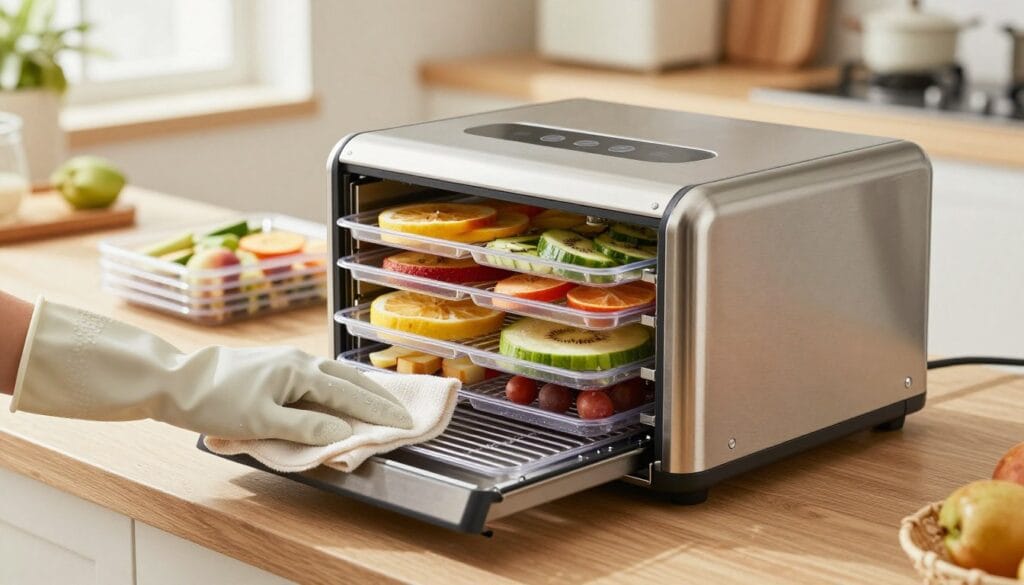
A daily cleaning routine is essential to prevent the buildup of bacteria and food residue. After each use, allow the dehydrator to cool down completely before cleaning. Remove and wash the trays with warm, soapy water. Use a soft sponge or cloth to clean the dehydrator’s exterior and interior. Regular cleaning prevents the growth of mold and bacteria.
Deep Cleaning Your Dehydrator
Every few months, perform a deep clean of your dehydrator. Mix equal parts water and white vinegar in a spray bottle. Spray the solution onto the dehydrator’s interior and trays, then wipe down with a damp cloth. For tougher stains, a mixture of baking soda and water can be used as a gentle scrub. Always refer to your user manual for specific cleaning instructions.
Common Problems and Solutions
Despite regular maintenance, issues may arise. Here are some common problems and their solutions:
Uneven Drying
Uneven drying can be caused by overcrowding the trays or inadequate airflow. Ensure that there’s enough space between the food pieces and that the dehydrator is not overloaded.
Foods Taking Too Long
If foods are taking longer than expected to dry, check the temperature setting. Some dehydrators may have varying temperature distributions. Rotating the trays during the drying process can also help.
Sticky or Moist Results
Sticky or moist results can be due to insufficient drying time or incorrect temperature settings. Ensure that you’re following the recommended temperature and time guidelines for the specific food you’re dehydrating.
| Issue | Cause | Solution |
|---|---|---|
| Uneven Drying | Overcrowding or poor airflow | Ensure space between food pieces and adequate airflow |
| Foods Taking Too Long | Incorrect temperature or inadequate rotation | Check temperature and rotate trays during drying |
| Sticky or Moist Results | Insufficient drying time or incorrect temperature | Follow recommended temperature and time guidelines |
Extending Your Dehydrator’s Lifespan
To extend the lifespan of your food dehydrator, regular maintenance is key. This includes cleaning after each use, performing deep cleans periodically, and storing the dehydrator properly when not in use. Proper care can significantly extend the life of your appliance.
Conclusion
Investing in a food dehydrator for home use can be a game-changer for those looking to make healthy and sustainable food choices. With the right food dehydrator 2026, you can enjoy a wide range of dried fruits and vegetables year-round.
As we’ve explored in this guide, the best food dehydrator can help you preserve food, reduce waste, and save money. Whether you’re a seasoned chef or a beginner in the kitchen, a food dehydrator is a versatile tool that can help you create delicious and healthy snacks.
By following the tips and guidelines outlined in this article, you’ll be well on your way to becoming a food dehydration expert. So why not start exploring the world of food dehydration today and discover the many benefits it has to offer?
FAQ
How do I choose the best food dehydrator for my specific kitchen needs in 2026?
Choosing the best food dehydrator depends on your goals! If you are looking for a food dehydrator for home use with a large capacity and even airflow, a box-style model like the Excalibur 3926TB or the Cosori Premium Food Dehydrator is a fantastic choice. If you have limited counter space and want an affordable food dehydrator, a stackable unit like the Nesco FD-1040 Gardenmaster allows you to expand your tray count as your hobby grows.
What are the main benefits of food drying for long-term food storage?
Food drying is one of the oldest and most effective methods of food storage. By removing moisture, you prevent the growth of bacteria and mold, resulting in high-quality preserved food that retains most of its vitamins and minerals. It’s a great way to enjoy seasonal produce like strawberries or herbs all year round without the need for chemical preservatives.
Where is the most reliable place to buy food dehydrator online?
You can buy food dehydrator online through major retailers like Amazon, Walmart, or directly from brand websites like Nesco or Excalibur. Buying online is often the best way to find competitive food dehydrator deals and read real-world food dehydrator reviews from other home chefs to ensure you’re getting a top rated food dehydrator.
Why should I compare food dehydrators based on airflow systems?
It’s important to compare food dehydrators because the airflow system determines how evenly your food dries. Horizontal airflow models, like the Magic Mill Professional Dehydrator, distribute heat evenly across all trays, so you don’t have to rotate them. Vertical airflow models, which are common in stackable designs, are often more compact but may require tray rotation for the best results.
How does a food dehydrator 2026 model help reduce household food waste?
A food dehydrator 2026 is a sustainability powerhouse! Instead of throwing away bruised apples or wilting kale, you can turn them into delicious apple chips or green powder for smoothies. This not only helps the environment but also provides significant cost savings by making the most of every grocery trip.
What features should I look for in a top rated food dehydrator for 2026?
Look for a unit with an adjustable thermostat and a built-in timer with an auto shut-off feature. The Cosori Premium Food Dehydrator is highly regarded because it offers precise temperature control, which is essential for safely making beef jerky or preserving delicate herbs without losing their flavor.
Is it difficult to clean a food dehydrator after making sticky snacks like fruit leather?
Not at all! Most modern models, such as those from Magic Mill or Nesco, feature dishwasher-safe trays or non-stick mesh liners. For deep cleaning, simply soak the trays in warm soapy water. Keeping your device clean ensures your preserved food stays fresh and free from cross-contamination.
Do I need to pre-treat fruits before food drying?
While not strictly necessary, pre-treating fruits like apples or pears in a citric acid or lemon juice bath prevents browning and helps maintain a vibrant color. This simple step, often highlighted in food dehydrator reviews, makes your home-dried snacks look just as professional as store-bought versions.
What should I do if my food is taking too long to dry?
If drying is taking longer than expected, check the humidity levels in your kitchen and ensure your slices are uniform in thickness. Also, avoid “case hardening” by not setting the temperature too high; if the outside dries too quickly, moisture gets trapped inside. Following the recommended settings for your best food dehydrator will ensure perfect results every time.